
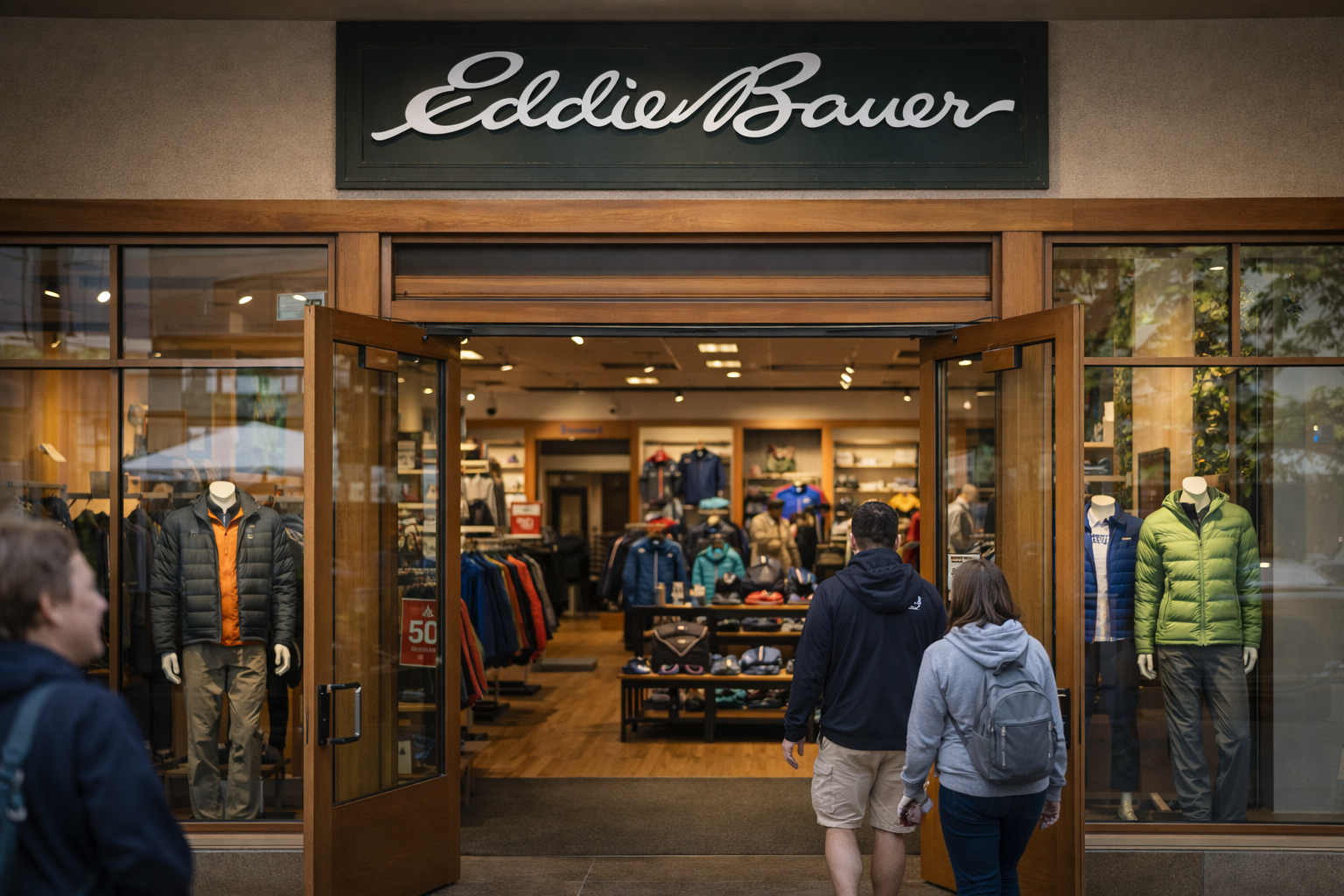
The operator of outdoor apparel brand Eddie Bauer filed for Chapter 11 bankruptcy protection on Monday, becoming another mid-market retailer to fall prey to the adverse impact of shifting consumer demand, rising costs and persistent uncertainty over trade policy.
In court filings in the District of New Jersey, the company said it was exploring a sale of some or all of its roughly 220 Eddie Bauer stores across the United States and Canada.
The filing marks the third bankruptcy in the brand’s more than century-long history, following restructurings in 2003 and during the aftermath of the 2008 financial crisis.
The company cited declining sales, supply chain disruptions and broader macroeconomic pressures as key drivers of its financial distress.
It said the impact of inflation and uncertainty around tariff policies had further squeezed margins and weighed on profitability.
A brand caught between post-pandemic demand and economic reality
Eddie Bauer LLC, headquartered in Washington State, said it saw a surge in demand in the period following the Covid-19 pandemic, when consumers spent more time outdoors and increased spending on lifestyle and recreational products.
However, that momentum proved difficult to sustain.
The company pointed to a shift in consumer preferences, higher input costs and tighter household budgets as factors that eroded demand.
It also cited the closure of a loophole on low-cost imports and higher tariffs, which added pressure to its cost structure and reduced earnings.
Marc Rosen, chief executive of Catalyst Brands, which owns the Eddie Bauer brand, said efforts to revive the business had made progress but were ultimately insufficient.
“While the leadership team at Catalyst was able to make significant strides in the brand, including rapid improvements in product development and marketing, those changes could not be implemented fast enough to fully address the challenges created over several years,” Rosen said in a statement.
Rosen added that Eddie Bauer had been in a “challenged situation” even before the formation of Catalyst Brands last year, with headwinds intensifying amid rising operating costs and ongoing trade uncertainty.
What the filing means for the brand
The Chapter 11 process is expected to affect Eddie Bauer’s brick-and-mortar retail footprint in North America.
Stores operated by licensees outside the US and Canada are not included in the filing and will continue operating, the company said.
Authentic Brands Group will retain ownership of Eddie Bauer’s intellectual property and could license the brand to other operators in the future.
Other brands within the Catalyst portfolio are not affected by the bankruptcy and will continue operating as usual.
The company said its e-commerce and wholesale businesses will also remain unaffected, as they are operated separately by Outdoor 5, LLC, following a transition completed earlier this year.
Eddie Bauer’s ownership has changed hands several times over the past two decades.
After filing for bankruptcy in 2009, it was acquired by Golden State Capital.
In 2021, the brand was acquired by Authentic Brands and SPARC Group.
Catalyst Brands was formed last year through the merger of SPARC and JCPenney, which mall landlords Simon Property Group and Brookfield acquired out of bankruptcy.
A wider shakeout in US retail
Eddie Bauer’s filing comes amid a broader wave of store closures and restructurings across the US retail sector.
Companies are increasingly using bankruptcy proceedings to streamline operations, exit underperforming locations and focus on more profitable channels.
Recent examples include the parent company of Saks Fifth Avenue, which sought bankruptcy protection last month and announced plans to close most Saks Off 5th stores.
Amazon has also shut the majority of its Amazon Go and Amazon Fresh locations as it narrows its focus on core grocery and delivery operations.
Industry analysts say legacy retailers face an especially difficult environment as consumers remain cautious amid elevated prices and economic uncertainty.
At the same time, competition from digital-first brands and discount retailers continues to intensify.
The outlook for historic retail brands appears increasingly fragile.
Sears and K-Mart, once dominant forces in American retail, now operate only a handful of stores, with industry observers predicting further closures in the near future.
The post From Eddie Bauer to Saks Global: what’s ailing US retailers? appeared first on Invezz
